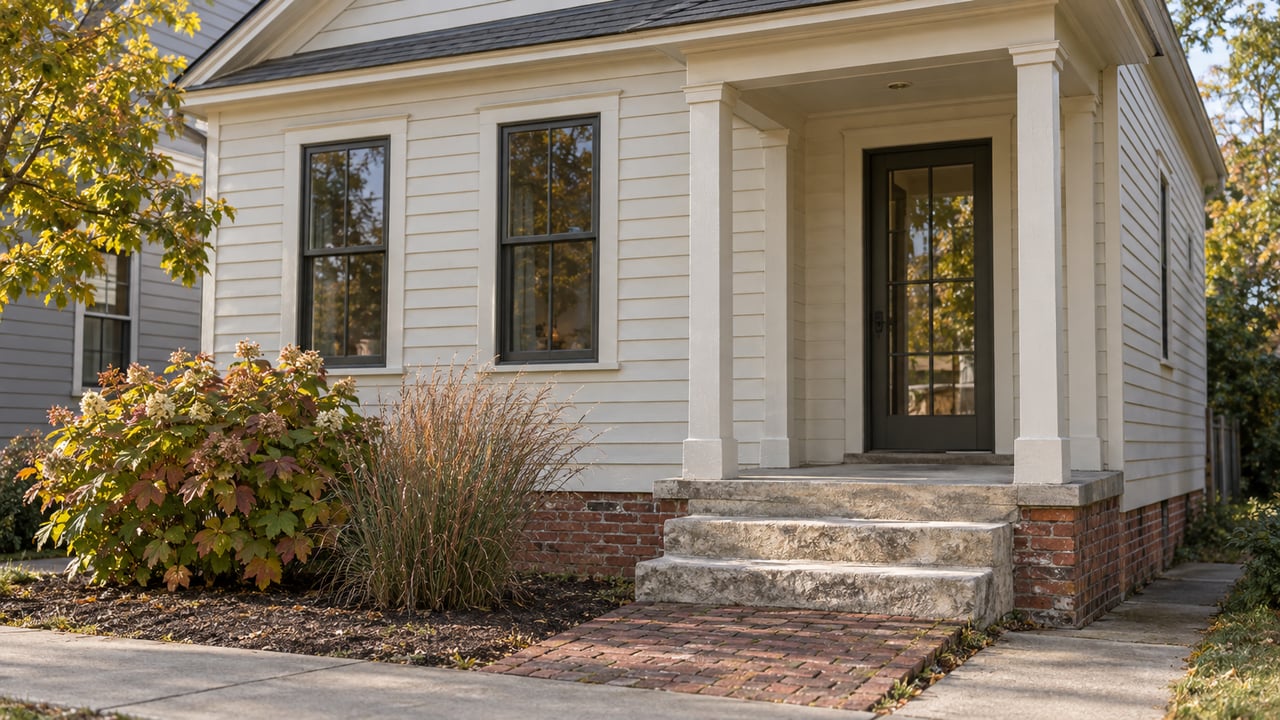
On a Second Saturday in June, the doors along 7th and Madison Streets in Paducah's LowerTown stand open from noon until eight at night. Windows show painters bent over easels, a potter's wheel turning in what used to be somebody's front parlor, a metalsmith's torch throwing light across a room that was probably a dining room a hundred years ago. Walk the same two blocks on a Second Saturday in February and the story changes. Some of those doors are locked. A hand-lettered sign asks you to call ahead. The walk is still there. It just is not the same walk.
That gap between June and February is not an unspoken slow season nobody talks about. It is written directly into how the Paducah Renaissance Alliance describes its own district: many of LowerTown's artists spend the first few months of the year focused on making work rather than hosting visitors, and most galleries and studios do not return to full public hours until April, running through December. For anyone in Paducah who treats Second Saturday as a standing plan rather than a once-a-year outing, that detail changes which months are worth circling and which ones call for a phone call first.
How the Renaissance Alliance Describes the Seasons
The Alliance's visitor guidance spells this out. It tells people planning a winter trip to call the office directly at 270.444.8649 for a current list of who is keeping appointment hours, and to pick up a visitor's map at the Convention and Visitors Bureau at 128 Broadway before assuming every studio is staffed. The district association gives visitors a clear way to confirm what is open, because the version of LowerTown you find in April is not guaranteed in January.
Second Saturday Gallery Walk: extended studio and gallery hours, noon to 8 p.m., generally April through December.
If you show up on a Second Saturday in January expecting the same open-door experience as May, you are working from the wrong season's information. The walk contracts every winter and expands again every spring, and knowing which side of that line you are standing on is the difference between a good afternoon and a locked door.
The Building That Doesn't Follow the Seasonal Split
Not everything in LowerTown runs on the artists' calendar. Paducah Beer Werks, at 301 North 4th Street, operates out of the neighborhood's old Greyhound Bus Station, and it keeps regular weekly hours through the year: closed Monday and Tuesday, open Wednesday through Sunday, with live music, comedy nights, and an open mic that don't pause for winter the way studio hours do. The brewery pours a beer called the Lower Town Brown, named for the neighborhood it sits in, alongside its other house styles. For residents who know the seasonal gaps in gallery hours, Beer Werks functions as the fixed point in a neighborhood where a lot of the other doors are unpredictable from month to month. It is the one stop on the walk that behaves the same in February as it does in June.
Where the Program That Built the Neighborhood Still Shows
The reason LowerTown works this way at all traces back to Paducah's Artist Relocation Program, which began in the early 2000s and offered low-interest loans to artists willing to buy and restore the neighborhood's early 20th century houses in exchange for living and working there. That is not a marketing story about a district that was designed to look artistic. It is the actual mechanism, and it explains why so many of the storefronts you pass are also somebody's home. Pinecone Gallery on 7th Street is a direct example: it is run by Char Downs, who relocated to LowerTown through that original program and still operates out of the space today. When a gallery door is locked on a Tuesday afternoon in January, it is frequently because the person who owns it is upstairs working, not because a business has failed to staff a shift.
The neighborhood keeps adding to that history rather than just preserving it. At the intersection of 7th and Madison, a mural was painted directly into the pavement itself, a joint project between local artists, the LowerTown Neighborhood Association, and the City of Paducah that took several years to complete, with additional intersection murals already planned. It sits at the same corner that anchors the annual festival crowd and the quieter monthly walk alike, a small daily reminder that the district is still an active collaboration rather than a finished restoration project.
The One Weekend the Calendar Doesn't Apply
Once a year, the seasonal caution disappears entirely. The 2026 Lower Town Arts & Music Festival ran Friday, May 8 from 5 to 10:30 p.m. and Saturday, May 9 from 10 a.m. to 10:30 p.m., free to attend, spanning several blocks of the district centered on 7th and Madison. The festival's own event materials list 76 vendors across artists, food, and community organizations, with live music on two stages and a full slate of hands-on activities. That is the version of LowerTown that ends up in photographs and gets shared as the district's highlight reel, and it is real. It is also two days out of fifty-two weekends.
The other eleven Second Saturdays of the year look smaller and quieter, closer to what someone living two streets over actually experiences most months: fewer vendors, no stages, a handful of studios with their doors open and a few with the appointment-only sign still up depending on the season. Neither version is the fake one. They are just different sizes of the same neighborhood, and knowing which one you are walking into saves you from measuring a quiet March afternoon against a festival weekend that only happens once.
Planning a Second Saturday Around the Actual Calendar
For anyone building a habit out of this rather than a one-time visit, the practical split is straightforward. April through December is the window for the full gallery-hopping version of Second Saturday, when most studios keep their posted noon-to-eight hours without a phone call first. January through March asks for either a quick call to the Alliance to confirm who is around, or a lower-key plan built around what stays open regardless of season, which in LowerTown mostly means Beer Werks and a walk past the National Quilt Museum, an easy distance from the district and worth the stop whether or not a single gallery door happens to be unlocked that day.
For a bigger-picture look at how LowerTown's rhythm fits into Paducah's wider calendar of summer festivals and riverfront weekends, our guide to the last three weekends of summer on the riverfront covers the season that leads directly into LowerTown's busiest stretch of the year.
None of this makes LowerTown less worth visiting in the off months. It just means the neighborhood tells you plainly, through its own published hours, when it wants company and when it wants to be left alone to work.
Understanding a neighborhood's actual rhythm, not just its highlight reel, is the kind of local reading that shapes good real estate decisions long before a listing goes up. If LowerTown or another corner of Paducah has caught your attention, HRE Advisors can walk you through what that part of town is really like to live in and what your money buys there. Request a Market Valuation & Strategy session to start the conversation.