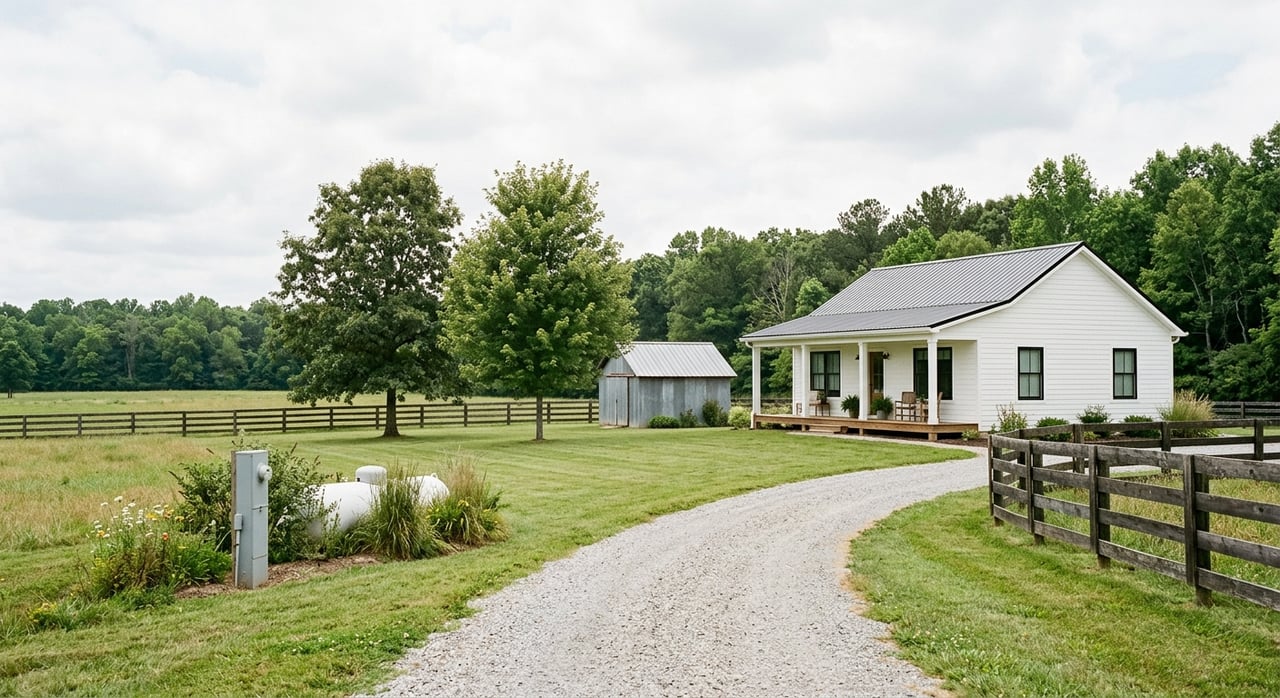
If you are thinking about buying land or a mini-farm near Mayfield, it is easy to focus on acreage first and questions second. But in this part of Graves County, a great-looking tract can come with very different rules, utility options, and development costs depending on exactly where it sits. When you understand those details early, you can shop with more confidence and avoid expensive surprises. Let’s dive in.
Start With Location Rules
One of the biggest questions for land buyers near Mayfield is whether a parcel is inside the city limits or outside them in unincorporated Graves County. That line matters because the governing rules can change quickly.
According to Graves County economic development information, there is no zoning outside the city limits of Mayfield. Inside the city, Mayfield has zoning and subdivision rules, which means the review process for a tract may be very different than it would be for a rural county parcel.
For many buyers looking for a mini-farm, that means you are often comparing rural county land rather than a standard subdivision lot. Still, you should never assume the rules are the same from one property to the next. The exact parcel location determines whether city zoning, subdivision requirements, or recorded deed restrictions are likely to matter most.
Why the city boundary matters
If you want room for a garden, a shop, a small pasture, or a homesite with privacy, rural county property may offer more flexibility as a starting point. But flexibility does not mean you can skip due diligence.
Inside Mayfield city limits, you may need to confirm zoning district details and subdivision requirements before moving forward. Outside the city, recorded restrictions and access issues may become even more important because county zoning is not the main framework.
Check Utilities Before You Fall In Love
A scenic tract is one thing. A usable tract is another. Near Mayfield, utility service can vary a lot by provider and by location, so this should be one of your first checkpoints.
The official Graves County utilities page lists service options that may include Mayfield Electric & Water, West KY Rural Electric, West Kentucky Rural Telephone, Atmos Energy, and multiple water districts. Mayfield Electric & Water also provides electric, water, wastewater, and fiber internet service in its service area.
That matters because two properties with similar acreage may have very different readiness. One tract may already have practical access to electric or public water, while another may need utility extensions or alternate systems.
Utility questions to ask early
Before you move too far into negotiations, ask:
- Is electric service available at or near the property?
- Is public water available, and if so, from which provider?
- Is sewer available, or will you need an onsite sewage system?
- Is natural gas available in this location?
- What internet options serve the property?
These are not small details. In many land purchases, infrastructure readiness has a major effect on both cost and usability.
Understand Septic and Well Readiness
If a parcel is not connected to public sewer or public water, you will want a clear picture of what it takes to make the site functional. This is especially important for mini-farm and hobby-farm properties.
Kentucky’s onsite sewage process begins with a site evaluation through the local health department to determine whether soil and site conditions are suitable. The Graves County Health Department process through Kentucky’s onsite sewage program outlines local steps, fees, and final inspection requirements.
For wells, the state says private wells and cisterns should be tested annually, and all well work must be done by a Kentucky-certified water well driller. Kentucky also notes that nearby land uses, including fertilizers, grazing, and poorly maintained septic systems, can affect water quality.
What this means for mini-farm buyers
If you plan to keep animals, grow crops, or simply enjoy a more rural setup, water and wastewater planning becomes part of the purchase decision. A property may look ideal on the surface but still need further review to confirm whether septic placement and water access will be straightforward.
This is one reason acreage alone does not tell the whole story. A smaller tract with easier utility access and suitable site conditions may be more practical than a larger parcel with more unknowns.
Review Access and Recorded Documents
Land can look simple from the road and still have important legal details in the background. That is why public records matter so much when you are buying acreage.
The Graves County Clerk records system includes deeds, mortgages, tax liens, and other real estate records, with public document history going back many years. This record system is a key source for title follow-up and document review.
For land buyers, recorded documents can help clarify access, ownership history, and whether older recorded documents affect the tract. That is especially useful for smaller rural parcels, where the road frontage you see today may not tell the full story.
Key records worth checking
As part of your due diligence, it is smart to review:
- Deeds
- Easements or access-related documents
- Mortgages and lien history
- Recorded subdivision documents, if applicable
- Other public real estate records tied to the parcel
A parcel may appear straightforward while still depending on older recorded conveyances or shared access arrangements. Public records are often where those details become clear.
Know How Land Value Works in Kentucky
Pricing land near Mayfield is rarely just about multiplying acreage by a rough number. Value depends on how usable the property is, what infrastructure is nearby, and how the land is classified.
According to the Kentucky Department of Revenue, real property is generally assessed by the local PVA at estimated fair cash value. The state also says qualifying farm land may be assessed at agricultural value rather than fair cash value.
Kentucky further explains in its real property assessment process guidance that residential uses such as the primary home, lawns, driveways, and pools must be excluded from agricultural acreage. In other words, mini-farm property can involve more than one valuation concept at the same time.
Why mini-farm pricing can vary
For buyers near Mayfield, value often comes down to practical use. A tract inside city limits may have one set of advantages. A county parcel with no zoning but limited utilities may have another. Septic feasibility, water options, road access, and the amount of truly usable acreage all influence value.
For broad context, the University of Kentucky’s 2025 farmland value summary reported Kentucky farm real estate value at $5,480 per acre, with cropland at $6,450 per acre and pastureland at $3,900 per acre. These figures are useful benchmarks, but the report also notes they are broad indicators and not based on individual sale prices.
That is why local, parcel-specific analysis matters. Two tracts with the same size can have very different market appeal if one is easier to build on, easier to serve, or easier to use.
Focus on Usable Acreage
When buyers search for land, they often start by saying they want five acres, ten acres, or more. That is a natural starting point, but the better question is often: How much of that acreage is usable for your goals?
Usable acreage depends on more than the survey number. It can be shaped by access, utility availability, septic suitability, and how much of the property fits your intended use. If part of the tract is tied up by setbacks, access routes, or site limitations, the raw acreage number becomes less meaningful.
This is especially true if you are buying a mini-farm property for a homesite plus some agricultural or recreational use. A well-located tract with solid infrastructure options may deliver better value than a larger parcel that needs much more work before you can enjoy it.
A Smart Buying Checklist Near Mayfield
Before you make an offer on land or mini-farm property near Mayfield, try to answer these questions:
- Is the parcel inside Mayfield city limits or outside them in Graves County?
- If inside the city, what zoning or subdivision rules apply?
- If outside the city, are there recorded restrictions that still affect use?
- Which utility providers serve the area?
- Is public water, sewer, electric, gas, or broadband nearby?
- Will the property require septic, a well, or both?
- Has the site been evaluated for onsite sewage suitability?
- What do the county clerk records show about deeds and related documents?
- How is the property likely being assessed for tax purposes?
- How much of the acreage is truly usable for your plans?
These questions can help you compare properties more clearly and spot hidden costs before they become your costs.
Why Local Guidance Helps
Buying land is different from buying a typical house in a neighborhood. You are not just evaluating the property itself. You are also evaluating access, infrastructure, records, and how the tract fits your plans.
That is where a local advisor with valuation knowledge can make a real difference. If you are comparing mini-farm or land opportunities near Mayfield, working with someone who understands both market context and property-specific factors can help you make a more informed decision.
If you are exploring land or mini-farm property near Mayfield and want a practical, data-informed perspective, connect with Dustin Hawkins for guidance grounded in local market knowledge and valuation insight.
FAQs
What should you check first when buying land near Mayfield?
- First, confirm whether the parcel is inside Mayfield city limits or in unincorporated Graves County, because that affects whether city zoning and subdivision rules apply.
How do utilities work for mini-farm property near Mayfield?
- Utility availability varies by location and provider, so you should verify electric, water, sewer, gas, and internet service for each parcel through the county utility resources.
What is required for a septic system on rural property in Graves County?
- Kentucky’s onsite sewage process begins with a local health department site evaluation to determine whether soil and site conditions are suitable for a system.
What should you know about wells on land near Mayfield?
- Private wells should be tested annually, and any well work must be completed by a Kentucky-certified water well driller.
Where can you verify deed and title-related records in Graves County?
- The Graves County Clerk records system is the public source for deeds, mortgages, tax liens, and other real estate records tied to a parcel.
How is mini-farm property assessed in Kentucky?
- Most real property is assessed at estimated fair cash value, but qualifying farm land may be assessed at agricultural value under Kentucky rules.